

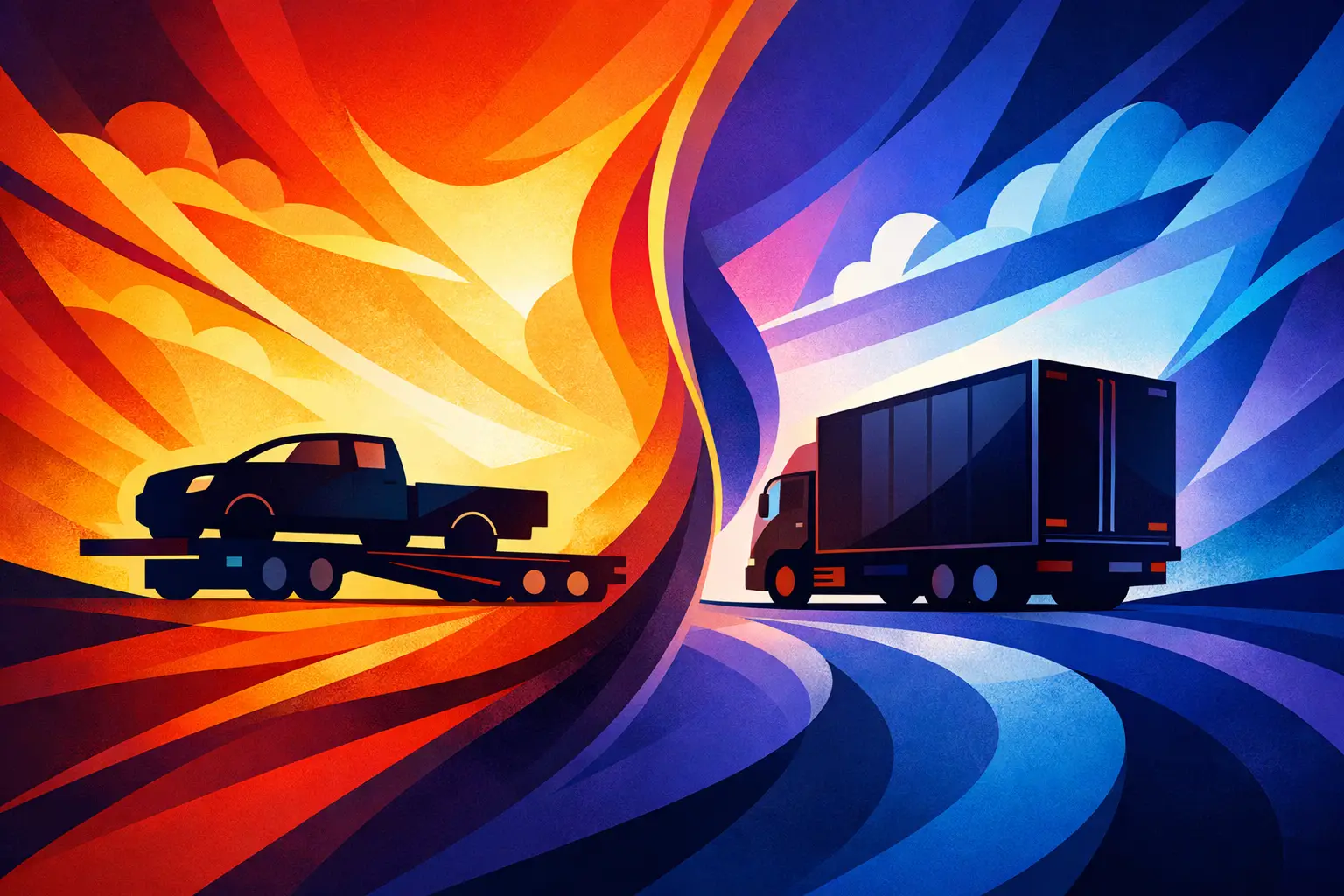
A vehicle can clear every customs requirement correctly and still arrive in a condition that disappoints its owner if the transportation method was not matched to the vehicle. The decision between open vs enclosed shipping affects cost, exposure to weather and road debris, scheduling options, and the handling your vehicle receives from pickup through delivery. For a standard daily driver, the practical choice may be very different from the right choice for a collector car, motorcycle, luxury EV, or newly purchased commercial vehicle.
For moves between the United States and Canada, transport selection should be considered alongside your import or export documentation, admissibility review, customs clearance plan, and final-mile delivery. The trailer is only one part of the transaction, but it is a meaningful one.
Open vs Enclosed Shipping at a Glance
Open shipping transports vehicles on the familiar multi-car carriers seen on highways across North America. Vehicles are secured on exposed upper or lower decks, typically alongside several other customer vehicles. It is the most common vehicle transportation option because carrier capacity is high, routes are widely available, and pricing is generally more economical.
Enclosed shipping places the vehicle inside a covered trailer. The trailer protects it from rain, snow, road salt, dust, and most road debris. Many enclosed carriers also provide liftgate loading, soft tie-downs, air-ride suspension, and lower vehicle capacity, though those features vary by carrier and should never be assumed without confirmation.
Neither method is automatically better. The right choice depends on what you are moving, the condition it must arrive in, the route and season, your pickup and delivery requirements, and how much risk you are willing to accept.
When Open Shipping Is the Practical Choice
Open transport is the right fit for many cross-border moves. It is commonly used for late-model passenger vehicles, dealership inventory, fleet units, trucks, SUVs, and vehicles being relocated for everyday use. If a vehicle is already driven regularly and has normal cosmetic wear, the added cost of enclosed service may not provide enough value to justify the premium.
The primary advantage is price. Because open carriers can transport more vehicles at once, the cost per vehicle is usually lower than enclosed transport. Open shipping also tends to offer more route availability, particularly on high-volume corridors and near major U.S. and Canadian cities. This can make scheduling more flexible when a vehicle must arrive near a customs appointment, port release, dealership deadline, or relocation date.
Open trailers are not careless transport. Reputable carriers secure vehicles using appropriate equipment and follow commercial transportation procedures. However, the vehicle remains exposed to normal travel conditions. Rain, snow, dust, insects, salt spray, and small stones can reach the vehicle. A wash after delivery is routine. In rare cases, road debris or another outside event can cause damage, which is why confirming the carrier’s cargo insurance and inspecting the vehicle at pickup and delivery matter.
For a typical used car moving from the U.S. to Canada, open shipping often delivers the best balance of cost, availability, and reliable service. The same may be true for a work truck or a fleet vehicle where operational readiness matters more than showroom-level presentation.
Open shipping works especially well when
Open transport is usually a sensible choice when the vehicle is a daily driver, inventory unit, standard SUV, pickup, or commercial asset; the route is relatively common; and the vehicle can tolerate ordinary road exposure. It can also be the more efficient option when several vehicles need to move on the same schedule.
That said, open transport may not be ideal for vehicles with extremely low ground clearance, fragile exterior components, fresh paint, or a value that makes even minor cosmetic risk unacceptable.
Why Owners Choose Enclosed Shipping
Enclosed transport is designed for vehicles where protection and handling take priority over the lowest possible price. It is commonly selected for collector cars, antiques, exotic vehicles, high-value luxury models, race cars, restored classics, specialty motorcycles, and vehicles with custom paint or modified bodywork.
The obvious benefit is coverage from the elements. This is especially valuable during Canadian winters and on long-distance routes where a vehicle could encounter snow, ice, rain, road salt, construction dust, or gravel. Road salt deserves particular attention. It can affect exterior finishes and underbody components, and it is a concern for collectors, restorations, and vehicles that will not be driven immediately after delivery.
Enclosed shipping can also provide better conditions for low-clearance vehicles. An enclosed carrier may use a liftgate or more gradual loading setup, reducing the risk of scraping a front splitter, air dam, exhaust component, or lowered suspension. Ask about the loading method before booking. Not all enclosed trailers have the same equipment, and not every carrier can accommodate an extremely low vehicle.
The trade-off is cost and availability. Enclosed capacity is more limited, so rates are higher and scheduling may require more lead time. Pickup and delivery windows can also be less flexible on less-traveled routes. If your vehicle needs enclosed transport for a specific border crossing date, auction release, or event deadline, planning early gives you more options.
Enclosed shipping is often worth the premium for
A covered trailer is usually justified when the vehicle has exceptional financial or sentimental value, a flawless or newly restored finish, low clearance, rare parts, or a requirement to arrive presentation-ready. It can also be a smart decision for motorcycles, particularly during poor weather seasons, because exposure and loading conditions can have a greater effect on a smaller, more vulnerable asset.
For electric vehicles, the choice is generally based on vehicle value, ground clearance, and condition rather than the powertrain alone. The same customs and transportation planning principles apply, but an EV’s battery condition, charge level, and transport instructions should be communicated accurately before pickup.
Cost Is More Than the Transport Quote
It is easy to compare open and enclosed shipping using only the line-item rate. The better question is what an unwanted outcome would cost. If an open-carrier trip leaves a daily driver dirty, the answer may be a car wash. If it exposes a freshly restored classic to salt, chips, or contamination, the cost and inconvenience can be much higher.
Rates can change based on distance, route demand, season, vehicle dimensions, operability, pickup and delivery accessibility, fuel pricing, and urgency. An oversized truck, bus, boat, or piece of heavy equipment requires a separate transportation assessment and may not fit within a standard open-versus-enclosed decision at all. Specialized trailers, permits, escorts, and securement requirements can drive the plan.
Be clear about your vehicle’s actual condition. A non-running vehicle, an inoperable convertible top, a lowered suspension, oversized tires, or loose aftermarket parts can affect the carrier assignment. Accurate details prevent last-minute repricing and help ensure the right equipment arrives at pickup.
Cross-Border Transport Requires More Than a Carrier
A carrier moving the vehicle across the border does not eliminate the import or export process. U.S. exports, Canadian imports, customs entries, required filings, title documentation, recall clearance where applicable, vehicle admissibility, duties, taxes, and release timing must still be managed correctly.
Transport timing should follow the clearance plan. Sending a vehicle to the border before its paperwork is ready can lead to storage charges, missed appointments, and avoidable delays. The carrier also needs the correct pickup and delivery instructions, the appropriate border location, and confirmation of who is authorized to receive the vehicle after release.
This is where an end-to-end approach makes a material difference. Border123 coordinates transportation alongside cross-border documentation and customs support, helping customers avoid treating vehicle shipping and border compliance as two disconnected tasks. A properly planned move considers both the trailer type and the sequence of the transaction.
Questions to Ask Before You Book
Before selecting a transport method, confirm the carrier’s cargo insurance limits and deductible structure, whether the policy applies throughout the full route, and how damage claims are handled. Ask whether the equipment can safely load your specific vehicle, particularly if it is low, modified, inoperable, or unusually large.
You should also clarify whether pickup and delivery are door-to-door where physically possible or whether a nearby meeting point is required. Residential streets with low wires, narrow turns, or limited turning space may not accommodate a full-size multi-car carrier. Enclosed trailers can face similar access limitations.
Finally, document the vehicle’s condition before pickup. Take dated photos of all sides, wheels, glass, roof, and any existing damage. Review the condition report carefully at pickup and again at delivery before signing. This simple step protects both you and the carrier if a question arises later.
Make the Choice That Protects the Whole Move
Choose open shipping when a standard vehicle, reasonable budget, and broad carrier availability are your priorities. Choose enclosed shipping when the vehicle’s condition, value, clearance, or exposure risk makes added protection worthwhile. Then make sure the transportation plan supports the border process rather than working against it.
A well-managed cross-border move starts with accurate vehicle details and a realistic delivery plan. When the trailer, paperwork, customs timing, and final destination are aligned from the beginning, your vehicle has a far better path from purchase or pickup to a compliant, secure arrival.
